SF Climate Week Reflection
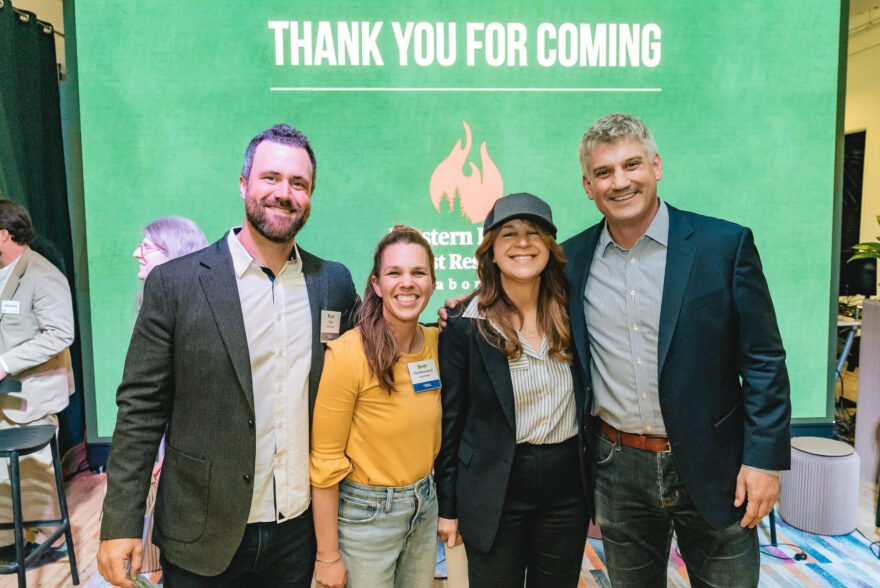
SF Climate Week is California’s premier climate solutions summit, bringing together climate organizations, leaders, and policymakers to accelerate real-world action. With over 450 events and 1,000 organizations participating, this decentralized gathering fosters critical conversations at the intersection of climate action and innovation.
From sawmill revitalization in Sonoma to robotic burn units built in the SF Bay, SF Climate Week 2025 offered a glimpse into the evolving future of forest resilience. We heard about mass timber campuses and goats, biomass bottlenecks and biochar, and the billion-dollar funding gap that’s still holding back the pace of restoration. These snapshots underscored a simple truth: technical innovation alone isn’t enough—what’s needed is a shift in how we value, fund, and coordinate this work.
Below we’ve pulled together highlight reels, quotes, and photos from the panels and gatherings we co-hosted throughout the week. Together, they reflect a question we’re asking ourselves every day at Blue Forest: how do we meet this moment with the urgency and imagination it deserves?
How Forestry Innovation is Reducing Wildfire Risk
Monday, April 21 | Bay Area Council | Klamath Ferry | Click here to view the photo gallery.
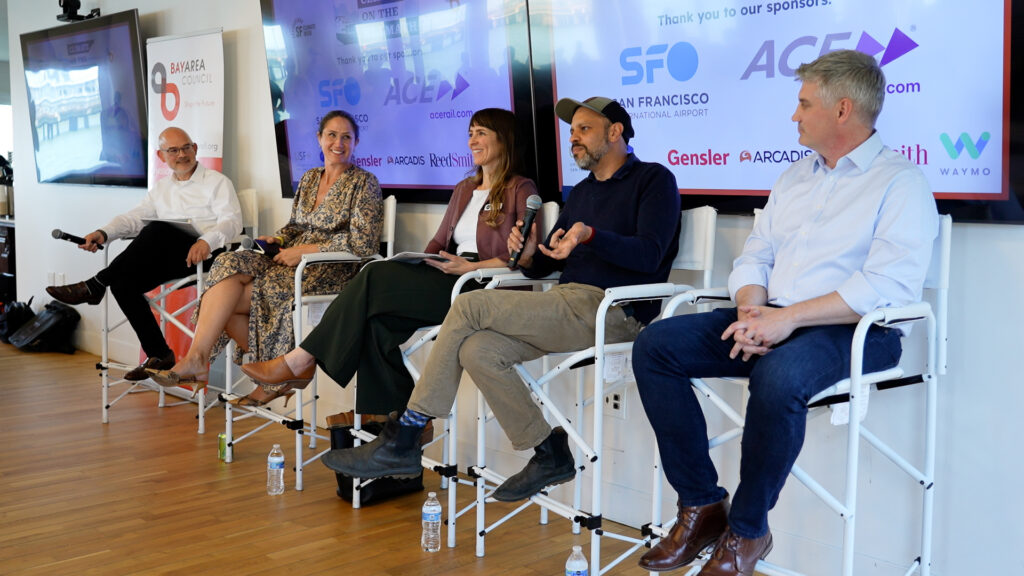
“Every wildfire needs something to burn.”
That simple truth, shared by BurnBot CEO Anukool Lakhina, grounded this panel on what it will take to scale fuels treatment nowadays. From robotic prescribed fire units to sawmill revival efforts in Sonoma, the conversation spotlighted the practical, political, and financial challenges of getting more acres treated—safely, affordably, and at scale.
Blue Forest CEO Zach Knight joined a powerhouse group of innovators including Lakhina, Regenerative Forest Solutions’ Temra Costa, and CSAA Insurance Group’s Kyra Peyton to explore what happens when entrepreneurs, insurers, and restoration leaders tackle a common threat from different angles. The takeaway? It’s not a question of whether we can treat forests—it’s whether we can build the systems and incentives to do it at the scale this moment demands.
Catalyzing Resiliency: Connecting Climate Capital
Monday, April 21 | San Francisco Brewing Co. | Click here to view the photo gallery.
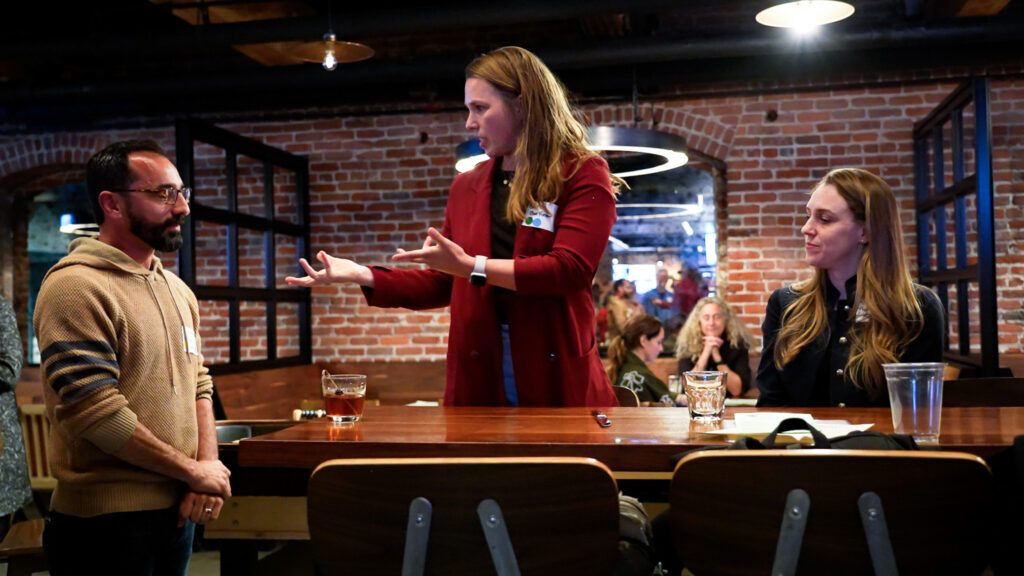
Over drinks and meaningful conversation, this happy hour brought together professionals from across finance, conservation, and policy to explore what it takes to fund climate resilience. Co-hosted by Blue Forest’s Seren Pendleton-Knoll, The Resiliency Company’s Maddie Vann, and Vibrant Data Labs’ Jay Hirschton, the evening was all about connection.
“This is the biggest thing that brought us together,” Seren reflected. “How can we do this at a systems level—not in our silos?” It was a night grounded in shared purpose and forward motion, but also a reminder that how we show up matters, too. As Jay put it: “If we can’t find joy in how we do this work, we’re never going to withstand it.”
Carbon Finance for Wildfire Resilience and Forest Restoration
Tuesday, April 22 | 972 Mission Street | Click here to view the photo gallery.
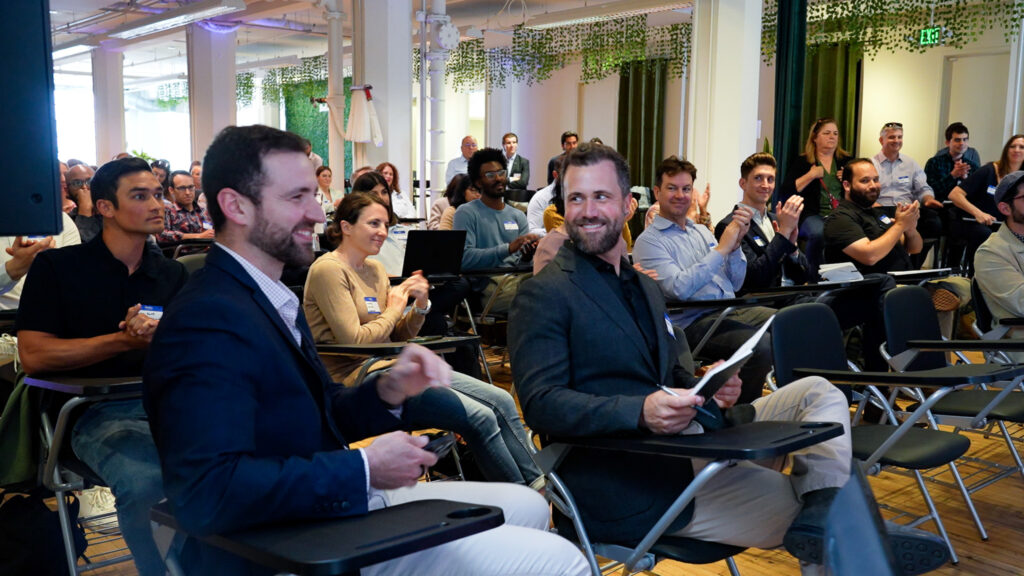
This interactive session brought together Blue Forest, PG&E, American Forest Foundation, and other leaders to explore how carbon markets can help fund forest restoration by valuing avoided wildfire emissions and durable biomass storage. Each organization gave a rapid-fire pitch on their approach before breaking into small groups to share challenges and opportunities in the space, and then reconvening to reflect on what it will take to align carbon finance with real ecological impact.
Protecting Forests & Scaling Climate Impact
Wednesday, April 23 | Charm Industrial HQ | Click here to view the photo gallery.
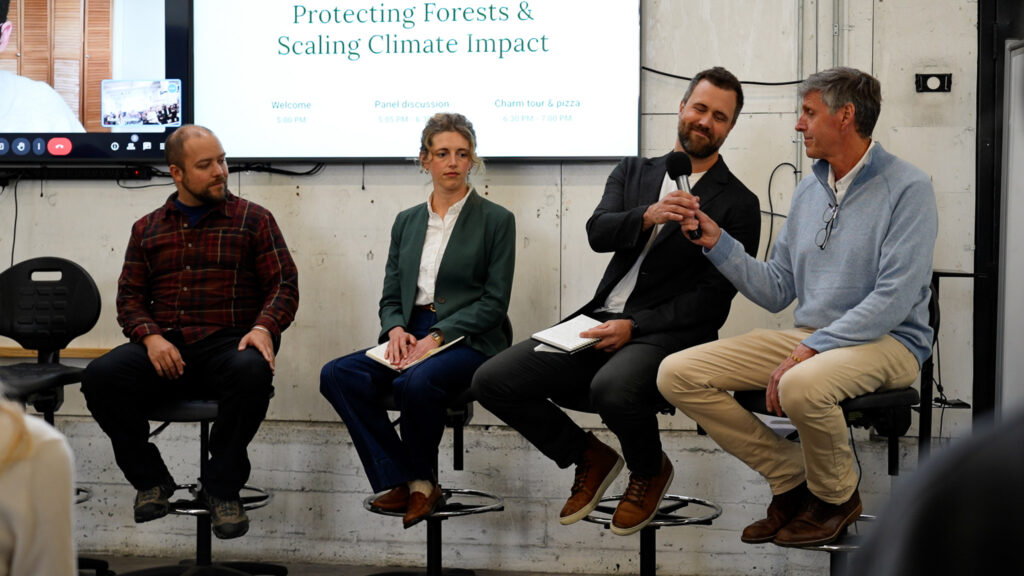
At Charm Industrial’s headquarters, Blue Forest’s Director of Natural Capital Micah Elias joined leaders from Wren, Cal Fire, the World Resources Institute, and others to tackle a pressing question: how do we turn excess forest biomass—often pile-burned in place—into durable climate value? The conversation revealed both urgency and opportunity. Zeke Hausfather of Stripe pointed to the closure of bioenergy facilities and a growing backlog of untreated acres, noting that “we need the ability to use a lot of this [biomass] quickly.”
Micah underscored the sheer scale of need, reminding the room that we need over $100 billion to accomplish the Forest Service’s goals across the West—compared to just $5–6 billion currently allocated. The message was clear: funding mechanisms, including carbon markets, must rise to match the scale of the wildfire crisis.
Why These Conversations Matter
The themes that surfaced throughout SF Climate Week are central to our mission at Blue Forest: scaling restoration, unlocking new financial pathways, and building the partnerships that make both possible. Whether we were discussing biomass supply chains or forest-based carbon markets, one idea kept coming through—this work is complex, urgent, and bigger than any one solution. We’re proud to stand with collaborators who are also focused on building systems-level change.